The Ark in Bukhara: The History of the Ancient Fortress and What to See Inside
If there's one place in Bukhara that best shows what city life looked like before today's streets and squares came along, it's the Ark fortress.
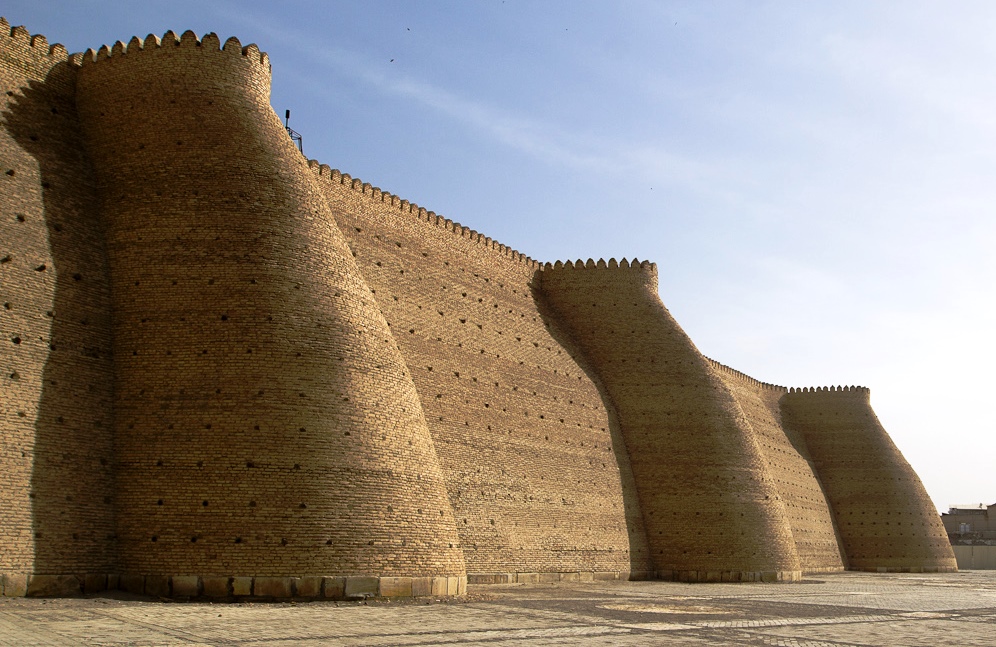
Massive earthen walls rise above the historic center of Bukhara, instantly setting the citadel apart from the low buildings of the old town. For centuries, the Ark was more than just a fortress — it was the residence of Bukhara's rulers, an administrative center, and effectively a city within a city.
Today it houses the Bukhara State Museum-Reserve, and the citadel itself is considered one of the oldest monuments in Bukhara.
What the Ark in Bukhara is
The Ark is Bukhara's ancient citadel, located in the northwestern part of the historic city.
According to archaeological evidence, the fortress's foundations date back to the 4th–3rd centuries BCE. Over many centuries the Ark was repeatedly destroyed, rebuilt and expanded, so its present-day walls are the result of a very long history.
Today's Ark covers about 3.9 hectares, its walls run roughly 789 meters long, and in different places they reach a height of 16–20 meters.
That's exactly why, standing in front of the entrance, it's easy to understand why the Ark was seen as almost a separate city.
Why the Ark is considered the heart of old Bukhara
Bukhara is more than two thousand years old, and throughout its history the city was one of Central Asia's most important centers of trade, culture and Islamic learning. The historic center of Bukhara, with its medieval layout, has been on the UNESCO World Heritage List since 1993.
But within the city, the Ark held a special place.
It housed the ruler's palace, government offices, the treasury, military quarters, mosques, storerooms and living spaces. Until 1920, the citadel remained the residence of Bukhara's rulers.
So when you walk through the Ark's gates today, you're literally entering the place from which Bukhara was governed for centuries.
The legendary history of the Ark
Many legends are tied to the Ark.
One of the most famous tells of the ancient ruler of Bukhara, Siyavush. According to legend, he took part in founding the fortress, which was itself destroyed many times afterward.
Another legend links the Ark's unusual shape to sages who proposed building the palace on a foundation resembling the constellation of the Great Bear (Ursa Major). Such tales can't be taken as an accurate historical account of the construction, but they show just how important a place the fortress held in Bukhara's collective memory.
Historians, meanwhile, rely primarily on archaeological research, according to which the Ark took shape gradually, over the course of many centuries.
The Ark's gates — the beginning of a journey through time
Today, a tour of the fortress begins at monumental gates with towers and a ramp leading up into the citadel.
Once, these gates were far more than just an entrance.
Anyone entering the governmental part of Bukhara passed through a sequence of spaces designed to underscore the emir's power. Beyond the gates lay an entire complex of palace, administrative and religious buildings.
Only part of the original structures survive today, but even from what remains you can picture the scale of the citadel.
And this is where things get really interesting.
What to see inside the Ark fortress
Today, museum exhibitions operate within the Ark, telling the story of Bukhara and the wider region. The Bukhara State Museum-Reserve maintains permanent exhibitions here devoted to the city's history, archaeology and the cultural heritage of the Bukhara oasis.
The Throne Hall
One of the most significant spots in the Ark is the space associated with Bukhara's rulers.
Official ceremonies and audiences took place here. It was in rooms like this that decisions were made that could affect the life of the entire emirate.
The most interesting thing to do is to try to picture the Ark not as a museum, but as a working residence — with a ruler, officials, guards, envoys and visitors climbing up here along this very same route every day.
The Juma Mosque
Religious buildings once stood within the citadel, including a large Friday mosque.
This shows that the Ark wasn't simply a palace. A full-fledged life unfolded here, with its own religious, administrative and everyday spaces.
The museum exhibitions
Exhibitions of the Bukhara State Museum-Reserve are on display inside.
They cover the region's history from its earliest periods up to more recent times and let you see archaeological finds, cultural artifacts and materials connected to Bukhara's history.
This is especially useful for tourists: after walking through the old town, you get the chance to see Bukhara not just as beautiful architecture, but as a genuine historic city.
Why the Ark looks like a huge earthen hill
One of the fortress's distinctive features is its appearance.
The Ark doesn't resemble many European stone castles. At its core is a massive earthen and mud-brick structure with steep slopes. Over the centuries, numerous building layers accumulated here, and today's hill essentially conceals the remains of even older structures beneath it.
That's precisely why the Ark is especially rewarding to view from the outside.
Standing in front of the fortress, it's easy to forget that what you're looking at isn't just a wall, but a multilayered archaeological monument, where one era literally sits on top of another.
What happened to the Ark in 1920
One of the most dramatic chapters in the fortress's history is tied to the events of 1920.
During the fighting for Bukhara, the Ark suffered severe destruction. A significant part of the historic buildings was destroyed or badly damaged. That's why today's Ark is only part of the vast palace-and-fortress complex that once existed.
Nevertheless, the citadel itself survived and went on to play an important role as a historical monument.
Starting in the 1940s, a museum complex began to take shape here, and today the Ark is part of the Bukhara State Museum-Reserve system.
The Ark and the Great Silk Road
For centuries, Bukhara sat on important trade routes of Central Asia.
The city was a major economic and cultural center, and its historic appearance took shape around trade, religion, craft and education. UNESCO emphasizes that it's precisely the well-preserved urban structure that makes historic Bukhara an outstanding example of a medieval Central Asian city.
The Ark, meanwhile, was where political power resided.
An interesting picture emerges: all around the citadel, the life of a bustling trading city carried on, while behind its walls lay the residence of the ruler.
Interesting facts about the Ark fortress
The Ark is more than two thousand years old. Archaeological evidence dates the citadel's founding to the 4th–3rd centuries BCE.
The Ark served as the residence of Bukhara's rulers until 1920. That makes it, in effect, the city's political center across many centuries.
A whole city existed within it. It housed palace, religious, administrative and household spaces.
Its walls reach up to 20 meters in height. A significant part of the structure is a mass of earthen and mud-brick masonry.
Bukhara's historic center is a UNESCO site. It was added to the World Heritage List in 1993.
The Ark exists in several time layers. It shouldn't be seen as a building from a single period: the fortress was destroyed and rebuilt many times.
🎧 Now try seeing the Ark with a local guide
You can walk up to the Ark's gates, take some photos, and move on.
Or you can find out who lived inside the fortress, how the residence of Bukhara's ruler was organized, where the throne hall stood, and why the Ark remained, for centuries, a genuine city within a city.
On our Bukhara tour, we tell the story not only of the Ark itself, but of the whole old town — so that the individual monuments come together into one larger story.
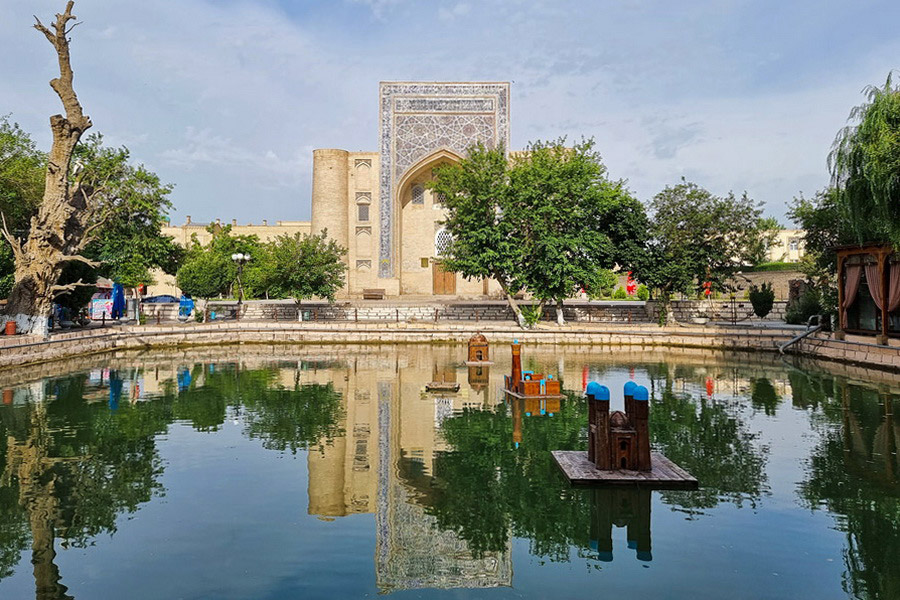
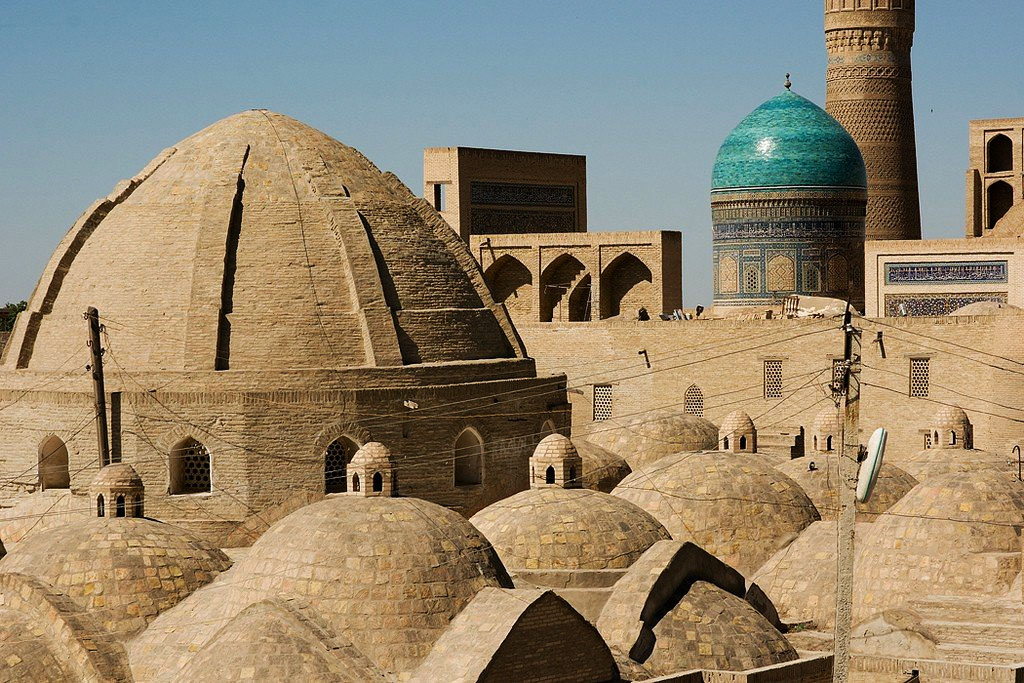
You'll walk through Bukhara at your own pace, hear the stories right at the landmarks, and gradually come to understand how the Ark, Kalan, Lyab-i Hauz, the trading domes and the city's old streets all connect to one another.
Bukhara is far more interesting once you start seeing the stories behind its beautiful buildings.
What to see near the Ark
The Ark sits at a very convenient point in Bukhara's historic center.
After the fortress, you can continue your walk to the Bolo Hauz Mosque, then head to the Poi Kalan ensemble, stroll over to the trading domes, and finish the route at Lyab-i Hauz.
Following this kind of sequential route is exactly what helps you get a real feel for Bukhara: here the landmarks aren't isolated from one another — they form a single, continuous historic space.
UNESCO specifically emphasizes that Bukhara's main value lies not only in its individual monuments, but in the preserved urban fabric as a whole.
The best time to visit the Ark
It's worth setting aside enough time for your visit to the fortress, rather than stopping at just a photo by the gates.
During the day it's good for examining the citadel's structure itself and the museum exhibitions, while early morning or early evening is an especially pleasant time to continue your walk through the old town.
One more tip: don't leave right after visiting the museum.
Walk around the Ark from the outside. It looks completely different from different sides, and the square in front of the fortress offers one of the most recognizable views of old Bukhara.