Chorsu Bazaar in Tashkent: History, What to Buy and What to Try
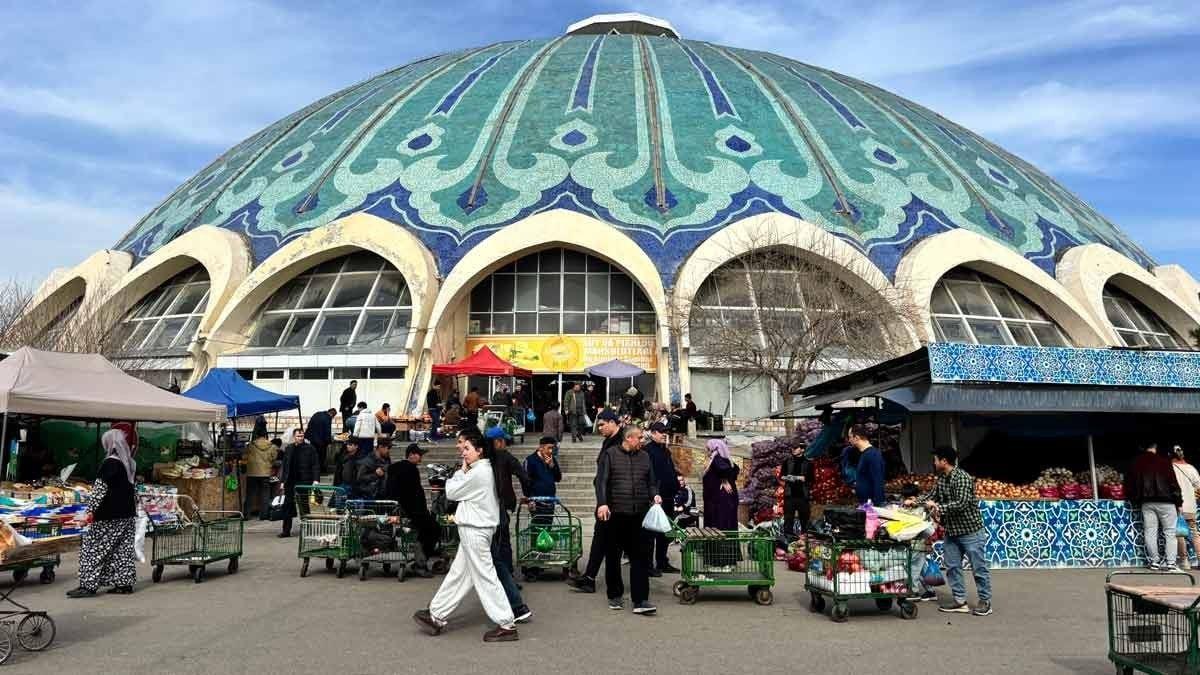
Chorsu sits at the very heart of the Old City — Eski Shahar. The bazaar occupies a spot that has been an important trading crossroads of Tashkent for centuries. Today people come here not only to shop, but also to feel the capital's truly distinctive atmosphere.
Where the name Chorsu comes from
The name "Chorsu" comes from Persian and is linked to the meaning "four roads" / "crossroads."
The name is no accident. Historically, trade roads converged here, and the district became one of the main trading centers of old Tashkent. According to Uzbekistan Travel, the bazaar's history goes back to around the 10th century. Some researchers trace the site's trading function to an even earlier period.
In old times, important trade routes connecting different parts of Central Asia passed through Tashkent. Local craftsmen, farmers and merchants arriving from afar all met at the bazaar.
So from the very start, Chorsu wasn't just a place where things were sold. It was a place where people, goods and cultures met.
Chorsu isn't just a food market
Today, the name Chorsu usually refers to an entire large trading complex.
There are food rows, clothing markets, craft stalls, souvenirs, spices, dried fruits, meat, dairy products and many other goods. Separate rows are devoted to carpets, textiles, tableware and craftsmen's wares.
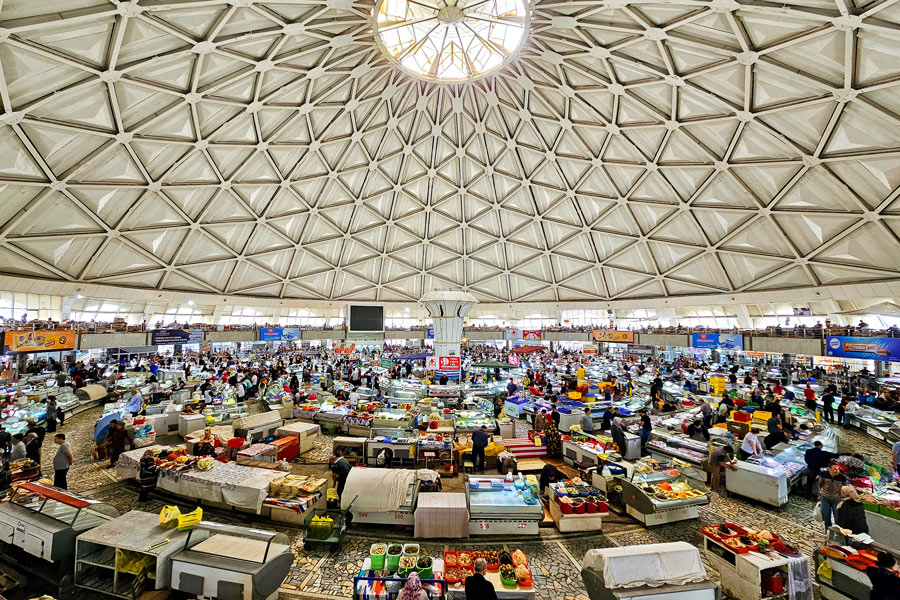
But the first thing that catches a tourist's eye is, of course, the huge turquoise dome.
The huge dome is a relatively young part of Chorsu
There's an interesting paradox here.
The trading district itself has a very ancient history, while the market's famous modern building is comparatively new.
The current architectural complex of Chorsu belongs to late Soviet modernism. It was designed by architects Vladimir Azimov and Sabir Adylov; the project was developed between 1980 and 1986, and construction continued from 1985 to 1990.
The architects didn't literally copy a medieval bazaar. Instead, they created a modern structure using dome shapes and decorative motifs familiar to Central Asia.
The result is an unusual combination: Soviet modernism + traditional Eastern architecture + a genuine, working bazaar.
UNESCO cites Chorsu as a particularly expressive example of 20th-century Tashkent modernism. The interior space is built like a whole "city": covered and open zones, galleries, staircases and passages alternate throughout.
What to buy at Chorsu
Dried fruits and nuts
For a first encounter with an Uzbek bazaar, this is almost a mandatory stop.
The stalls offer dried apricots, raisins, dates, figs, various kinds of nuts and many other dried fruits. You can taste them before buying and put together your own assortment to take home.
Spices
Chorsu is a great place to buy Uzbek spices.
Cumin, coriander, paprika, various plov spice blends and other fragrant seasonings are sold here. Even if you're not planning to cook plov yourself, a small pack of spices is one of the simplest souvenirs from Uzbekistan.
Eastern sweets
At the market you'll find a variety of sweets that are hard to imagine an Uzbek feast without: halva, parvarda, and various dry and chewy confections.
Tourists often buy small sets specifically as gifts — they fit easily into luggage and convey the local flavor well.
Qurt, suzma and other dairy products
Under the main dome is one of the food rows most interesting to tourists.
Here you can see qurt, suzma, katyk and other traditional dairy products. Qurt is especially recognizable: small, salty, dried balls made from soured milk curd. It may seem unusual the first time, but it's definitely worth trying.
Lepyoshka (flatbread)
It's impossible to imagine Uzbekistan without lepyoshka, and at Chorsu it looks especially impressive.
Warm flatbreads are sold right from the market stalls here. It's also a good excuse to simply stop and see just how important bread is in the everyday life of local residents.
Ceramics and craft goods
Around the main food market are rows selling the work of local craftsmen.
You can find ceramics, national fabrics, tyubeteikas (skullcaps), wooden items, jewelry and other souvenirs. Chorsu also sells traditional textile items and folk-art pieces.
For a tourist, this is often more interesting than an ordinary souvenir shop: you can browse many different goods at once and compare options.
What to try at Chorsu
The bazaar isn't just for shopping.
One of the most interesting parts is the so-called "food row," where you can try dishes of Uzbek cuisine. Among what's on offer at the market and around it are narin, khanum, qazy, shashlik and other traditional dishes.
There's an important difference from a restaurant here: at the bazaar, food is experienced as part of everyday life. Nearby, people might be buying groceries for the family, having breakfast, discussing the news and meeting friends, all at the same time.
To haggle or not?
Haggling at an Eastern bazaar is part of the tradition, but here it all depends on the item and the seller.
In the souvenir rows, gentle bargaining is quite appropriate. At the ordinary food stalls, though, prices are often viewed differently.
The best approach is not to turn the purchase into a contest. A smile, a few words in Uzbek and genuine interest in the item work much better than overly aggressive haggling.
Why Chorsu is worth seeing even if you don't want to buy anything
This is probably the main point.
You don't have to buy any dried fruit, ceramics or spices at all, and you'll still come away with an impression from Chorsu.
The market is interesting for its sounds, smells, colors and people. Under a single dome, tourists, sellers, families, shoppers and regular customers all mix together — people who come here not as a sightseeing stop, but because this is simply their everyday market.
That's exactly why Chorsu shows off modern Tashkent so well: the city doesn't feel like a museum here. Its history keeps on living in the most ordinary, everyday things.
Interesting facts about Chorsu bazaar
Chorsu is older than its famous dome. Trade on this site has a history of many centuries, while the market's modern architecture appeared only at the end of the 20th century.
In Soviet times, Chorsu was officially called the October Bazaar. However, the familiar name "Chorsu" continued to live on in everyday speech and eventually returned as the official name.
This isn't just a market — it's an important monument of Tashkent modernism. Chorsu's architecture is studied as one of the most expressive examples of late-Soviet architecture in the city.
The market is located near some of the Old City's most famous landmarks. From Chorsu you can walk to the Kukeldash Madrasah and other historic sites.
The best way to visit Chorsu
It's convenient for tourists to come here in the morning, when the market is especially lively. After a walk through Chorsu, you can continue your route through the Old City and stop by the Kukeldash Madrasah, then head on to the Hazrati Imam complex.
The "Chorsu" metro station is located practically right at the market, so it's very easy to get here from other parts of Tashkent.
According to Visit Tashkent, the market's stated opening hours are 9:00 AM–6:00 PM, although individual trading rows may keep their own schedule.
CityInsider's tip
Don't rush straight under the main dome. First, take a little walk around it, look into the side rows, see what the locals are buying, and only then head inside.
On our group tour Tashkent: Old City at Sunset, you can get to know Chorsu much more closely — visiting craft workshops, joining in on making lepyoshka, and strolling through the streets of the old town.